

The European Student Card runs through a centralised digital platform called the ESC Router. This is a database which
- allows participating institutions to generate a European Student Card
- enables card validation between the information systems of card issuers in Europe
- identifies the student and their status across Erasmus+ programme countries
The ESC-Router delivers the following features:
- European Student Card Number (ESCN): a unique card identifier that serves to identify student cards and validate them
- European Student Identifier: an identification number that enables students to uniquely identify themselves when they access student mobility services online
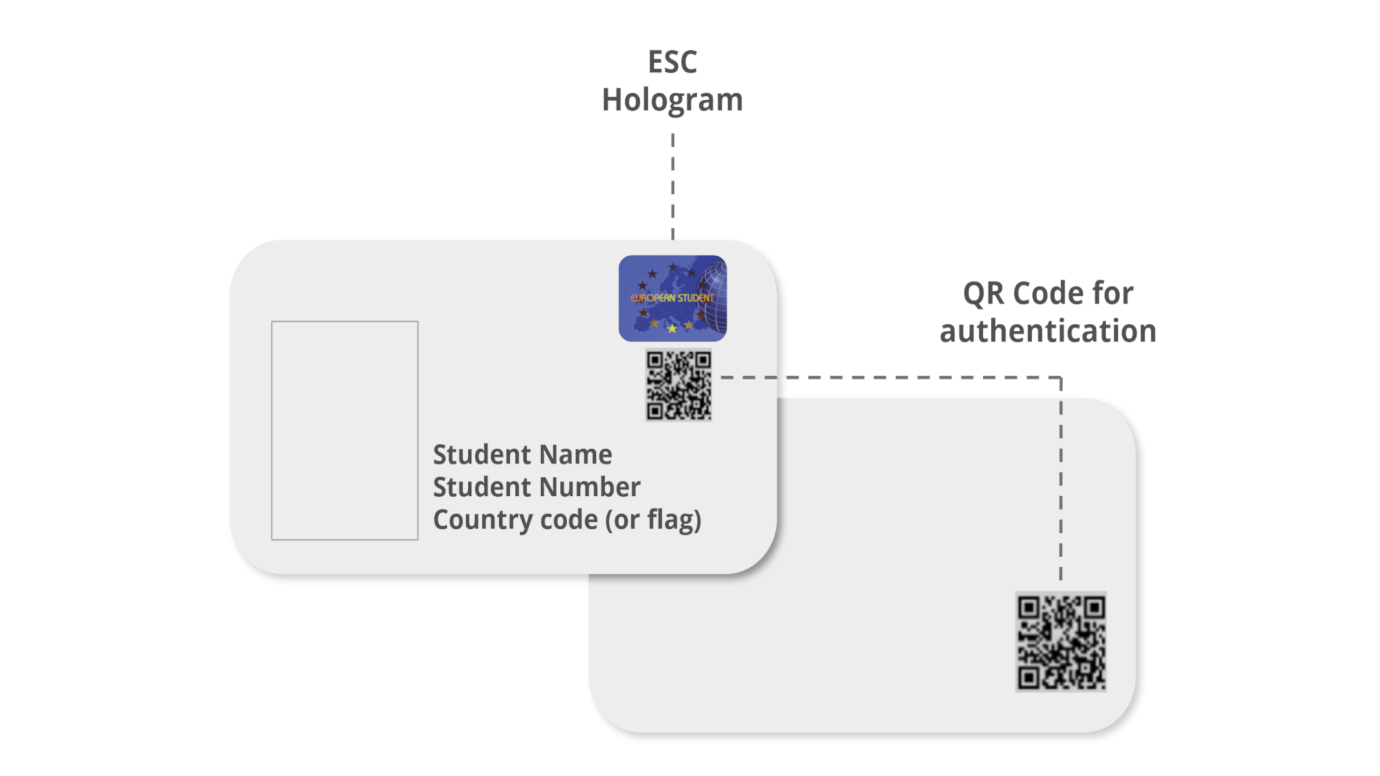
- ESC Hologram: a logo on the front of the card that certifies the card’s authenticity at European level.
- ESC QR Code: a digital format code on the front and back of the card which also certifies the card’s validity at European level.
Only the necessary data on the ESC (i.e., the ESCN) will be stored in the ESC Router allowing the central management of the ESCs and facilitating the exchange of information between card issuers.